
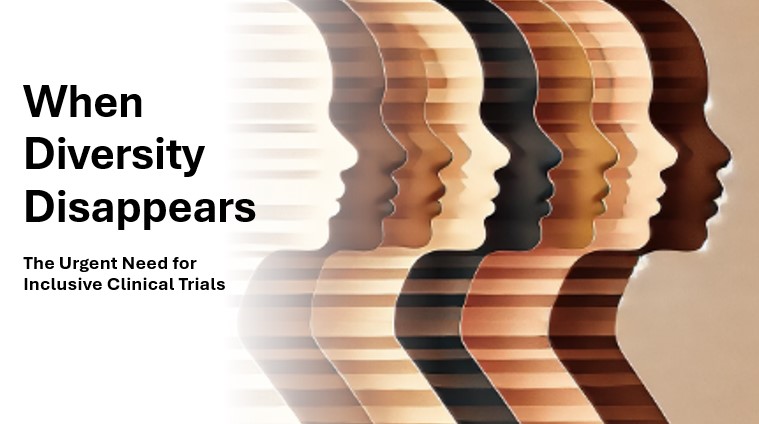
When Diversity Disappears…

Clinical trials drive medical advancements by developing safe and effective treatments. However, a major issue threatens their reliability—lack of diversity. When trials exclude participants from different racial, ethnic, and socioeconomic backgrounds, the data does not represent the real-world population. The recent removal of key FDA web pages on diversity initiatives raises concerns about the future of inclusive medicine.

Why Diversity in Clinical Trials Matters

People respond differently to treatments due to genetic makeup, environment, and lifestyle. Historically, trials have overrepresented white participants, creating gaps in how medications affect other groups. Without inclusive data, doctors may unknowingly prescribe less effective treatments or those with harmful side effects.

For instance, some heart medications and cancer treatments work differently across racial groups due to genetic variations. Without diverse participants, these differences remain undetected until the drug reaches the market, putting lives at risk. Representation in trials ensures every community benefits from scientific advancements and improved healthcare outcomes.

The Consequences of Exclusion

Ignoring diversity in clinical research has serious effects:

  • Wider Health Disparities: Underrepresented groups may receive ineffective treatments, worsening existing inequities.

  • Lower Drug Effectiveness: Medications tested on one demographic may not work well for others.

  • Erosion of Trust: Communities with histories of medical mistreatment may hesitate to join trials if they feel excluded.

The recent removal of FDA programs, such as the OCE Equity Program and Diversity Action Plans, signals a step backward. These initiatives aimed to ensure clinical research reflected all patient populations. Their disappearance raises concerns about the future of equitable healthcare policies.

A Call to Action

Promoting diversity in clinical trials requires commitment from researchers, policymakers, and healthcare institutions. Steps include:

  • Restoring Diversity Programs: Agencies must reinstate initiatives that encourage inclusive research.

  • Engaging Communities: Building trust with underrepresented groups through education and outreach can boost participation.

  • Enforcing Policies: Regulations should require pharmaceutical companies to meet diversity benchmarks before drug approvals.

Without action, healthcare inequities will grow. Inclusive research is not just about fairness—it is essential for treatments that serve everyone.

Stay informed on inspection and audit readiness—Join our mailing list to subscribe to our newsletter and keep inclusive clinical trials accountable.

Related Posts

3 Surefire Ways your TMF can extend your Inspection

The Trial Master File (TMF) is the backbone of the clinical trial. It consists of essential documents which not only enable the conduct of a clinical trial, but also enable the evaluation of the quality of data produced. One of the questions asked at the beginning of...

read more...

Key Aspects of an Inspection Ready TMF

Having a complete Trial Master File (TMF) is the highest priority for sponsors in terms of providing an accurate picture of the affiliated clinical trial.   This article speaks about key aspects and techniques to implement in order to have an inspection-ready TMF. Key...

read more...

Steps on Implementing a Clinical QMS

By Afifa F. - 2K Clinical Consulting, Inc.     There is a popular saying in quality management that if you do not have the process written down, then it probably didn't happen. Just like any other business, Clinical trials must have a management system as well. This...

read more...

All About Protocol Deviations

The protocol for a clinical trial describes the entire study in detail, including the operational details of how it should be carried out. The purpose of the study protocol is to protect the health and safety of study participants while also proving efficacy of the...

read more...

FDA vs EMA in Terms of GCP Inspections

The national and global regulations for conducting clinical trials involving human participants are known as Good Clinical Practice (ICH-GCP). They include not only quality criteria, but also regulatory guidelines to ensure that all newly created pharmaceuticals and...

read more...

3 Ways to Close the Diversity Gap in Clinical Trials

The selection of the appropriate research participants is critical to the success of any clinical trial. Regrettably, the majority of clinical trials done are severely lacking in diversity. All too frequently, cultural and genetic factors unique to Asians,...

read more...

Pharmacovigilance and Drug Safety

Recently approved medications and those already on the market can benefit from pharmacovigilance to help ensure patient safety. While pharmacovigilance practices are highly regulated in the context of clinical trials, post-marketing incidence reporting is not properly...

read more...

Inspection Readiness Checklists: 

The Benefits & How to Utilize Them Checklists are invaluable tools in Inspection Readiness programs within regulated industry of pharmaceutical, medical device and biotech companies. They provide a structured approach to ensure that all necessary preparations are...

read more...

Why Quality is Everyone’s Business

World Quality Day, celebrated on a global scale every year on the second Thursday in November, serves as a reminder that quality is not just a buzzword or a department in your organization—it's everyone's business. Whether you work in clinical operations, healthcare,...

read more...

The Iceberg Illusion of Inspection Readiness

Inspection readiness often looks effortless from the outside. A clean TMF.Confident site staff.Minimal findings.A smooth inspection close-out. When an FDA or regulatory inspection goes well, it’s easy to assume the organization was simply “always inspection-ready.”...

read more...

Live Training Notification Request

Be among the first to hear about upcoming live training events, invited presentations, registration opportunities, and personalized onsite training options.

You will be notified when we have live trainings.